
Your Step-by-Step Guide to Launching Your Show
For entrepreneurs, content creators, and those on a journey of personal growth and recovery, a podcast is one of the most powerful tools you have to build authority, connect deeply with your audience, and transform your message into a sustainable business. It’s a versatile medium that allows you to share your expertise, build a community, and even re-establish your voice, a key element of success after profound life crises.
If you’ve been dreaming of launching your own audio show but feel overwhelmed by the technical jargon and complex steps, you’ve come to the right place. Starting a podcast is far more accessible than you think, especially when you understand the fundamental role of the RSS Podcast Platform in your success. This definitive guide breaks down the process into four actionable steps, ensuring you launch your show with confidence and a solid plan for SEO discovery and growth.
Step 1: Laying the Foundation—Concept, Niche, and Purpose
The first and most crucial step in starting a podcast is establishing a concrete plan and defining your purpose. Without a clear “why” and “what,” you risk “podfade”—the burnout that happens when creators lose motivation and consistency.
Define Your Goals and Audience
Ask yourself:
- What is your “Why”? Are you looking to generate leads for your existing business, establish yourself as an industry thought leader, or simply share an important message? Knowing your reason motivates you to stay consistent.
- Who is your “Who”? You need to get crystal clear on your ideal listener. Define their pain points, interests, and how you can speak their language. A clear target audience helps you shape your tone, format, and style.
- Pick Your Niche: While you should pick a topic you truly care about, it must also be focused. Going niche makes it easier to plan content and attract the right listeners. For example, instead of “History,” choose “The History of Bread”. If you can outline at least 10 to 20 potential episode ideas, your concept has longevity.
Naming and Branding
Your podcast name is your first impression and a critical part of your brand. Choose a name that is specific, succinct, memorable, and—most importantly—available across social media and domain names. For SEO, great podcasts often grab an actually searched keyword, so try to include your topic in the name (e.g., “business,” “entrepreneur”) if it fits naturally.
Step 2: The Technical Setup—Gear and Recording Essentials
The good news is that starting a podcast no longer requires a professional studio. You can begin with a minimalist setup and upgrade as your show grows.
Essential Equipment
- Microphone: This is your most important investment. A good USB microphone offers excellent quality without needing a separate audio interface. I chose a Samson Q2U microphone to get started.
- Headphones: Use them while recording to monitor your audio and catch any background noise or technical issues immediately. You don‘t need to go high-tech, just a set of headphones.
- Recording/Editing Software: There are many free or low-cost options available. Look for software that offers multi-track recording if you plan on having guests or co-hosts. Riverside is an option that many Podcasters use. Personally, I didn‘t start a multi-track recording option. I use Zoom.
- Branding Assets: Create compelling cover art. This single image will represent your show across all podcast platforms, so ensure it is high-resolution, eye-catching, and clearly legible, even as a small thumbnail. I did get help with my logo image, as I paid for 12 months of Podcast support when I got started. This helped me to be consistent. Plus, I knew I would not be able to do all of the functions myself. I had a lot of stress in my life with overlapping litigations from a former romantic partner who did not honour the promises he made.
Recording Your First Episodes
Many seasoned podcasters recommend having several episodes recorded before your official launch date. This ensures you have a buffer while you adjust to a regular publishing schedule. This is how I got started. The company I was working with advised that we have at least six episodes recorded before the launch. Focus on delivering value and maintaining a conversational tone. Once your first episode is recorded and edited, you are ready for the most important step: getting your voice out into the world.
Step 3: Mastering Distribution with an RSS Podcast Platform
You have the content, but how do you get it onto Apple Podcasts, Spotify, Amazon Music, and all the other listening apps? The answer lies in the RSS Podcast Platform.
What is an RSS Feed?
An RSS feed (Really Simple Syndication) is a standardised web feed, essentially a link that contains all the information about your podcast, including episode titles, show notes, and the audio file itself. When you upload an episode to your podcast host, the RSS feed automatically updates, and all the major podcast directories which constantly monitor the feed immediately pull the new content to their platforms.
Choosing the right hosting platform is the single most important technical decision you will make, as it is the engine that powers your RSS Podcast Platform and handles your distribution.
Why Choose RSS.com to Power Your Podcast
To make this step as simple as possible, we recommend an easy-to-use and intuitive solution designed for both beginners and veterans: RSS.com.
RSS.com is an all-in-one hosting solution that makes the distribution and growth of your podcast seamless. By choosing RSS.com, you get all the features you need in one place:
- Unlimited Everything: They offer unlimited audio storage and unlimited episodes, meaning you never have to worry about running out of space as your content library grows.
- Automatic Distribution: You upload your episode once, and RSS.com automatically distributes it to the top podcast directories, including Spotify, Apple Podcasts, Amazon Music, and more. This eliminates the need to manually submit to each platform.
- Free Podcast Website: Every user gets a free, professional-looking podcast website to showcase your brand and content. Check out the look of the free website that was created for Mindset Money Success
- Advanced Analytics: RSS.com provides cross-platform analytics so you can track downloads, listener locations, and trends to understand who is listening and where.
Start Generating Income On Your Podcast
- Monetisation Tools: Even new podcasters can begin earning revenue with features like their PAID programmatic ad insertion (with a low threshold of just 10 monthly downloads) and listener funding/donation tools. If you would like help getting started, book a 1:1 chat with Loraine.
- Accessibility: Their paid plans include AI-powered episode transcripts, which boost your show’s visibility in search engines and improve accessibility for your audience.
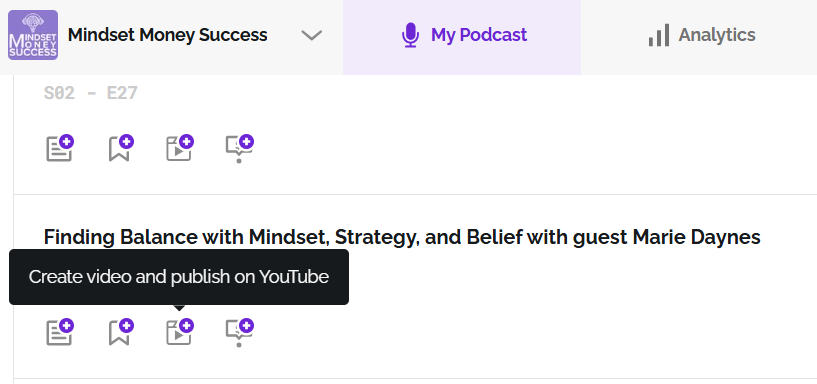
- AI-Generated Video: There is also the ability to create a video version of your podcast audio. If you have a dedicated YouTube Podcast Channel, you can easily connect this to your RSS platform. When your Audio podcast is published live, you can use RSS AI video generation tool that will publish the video version directly to your YouTube Podcast.
As you can see from the image below, from my dashboard. If you are not interviewing or chatting with guests, this is a great option to get your recordings straight onto your YouTube Channel.
With a platform like RSS.com running your RSS Podcast Platform, you can focus entirely on creating excellent content.
Ready to start your podcasting journey?
Launch your show today with the platform that makes it simple: Get started for free with RSS.com
Step 4: Launch, Promote, and SEO for Discovery
Once your RSS Podcast Platform is set up, it’s time to focus on visibility. SEO for podcasts involves optimizing your content for two audiences: search engines (like Google) and podcast directories (like Apple and Spotify).
Optimise for Search
Simply uploading your audio is not enough. To maximise your show’s discoverability, you must follow key SEO best practices:
- Optimise Titles and Descriptions: Use your primary and secondary keywords naturally in your podcast title, show description, and especially in your individual episode titles and show notes.
- Transcriptions are Gold: Publishing a full transcription of every episode to your website or blog is an often-overlooked SEO practice. It gives search engines thousands of indexed words, allowing people who search for specific phrases or topics to find your content and, by extension, your podcast.
- Dedicated Blog Posts: Every episode should have a dedicated web page or blog post on your site. This allows you to include bullet points, FAQs, and a strong call-to-action, attracting search traffic that you can then convert into subscribers.
The Promotion Strategy
Don’t wait for listeners to find you—go out and find them!
- Social Media: Create short, compelling audio clips or “soundbites” for promotion on social channels, directly linking back to your episode page.
- Interlink Content: If your blog is about online business strategies or personal recovery, link your relevant podcast episodes within those articles, and vice versa. This builds a strong, interconnected content ecosystem, a foundational move for any entrepreneur seeking success.
Your Voice Deserves to Be Heard
Starting a podcast is a journey of consistency, commitment, and connection. While the idea of launching can feel daunting, the right tools simplify the entire process. By starting with a focused concept, using quality audio, and leveraging a powerful host like RSS.com to manage your RSS Podcast Platform and distribution, you can quickly move from aspiring host to successful podcaster.
Now is the time to turn your unique knowledge and valuable experience into an impactful audio show. Get started today, and share your message with the world.
Launch Your Podcast Today
Skip the technical headaches and get your voice heard on every major directory. Start your podcasting journey with the power of RSS.com and claim your unlimited hosting plan: Start Podcasting Now

Recent Comments